Management Roundtable on Human Capital
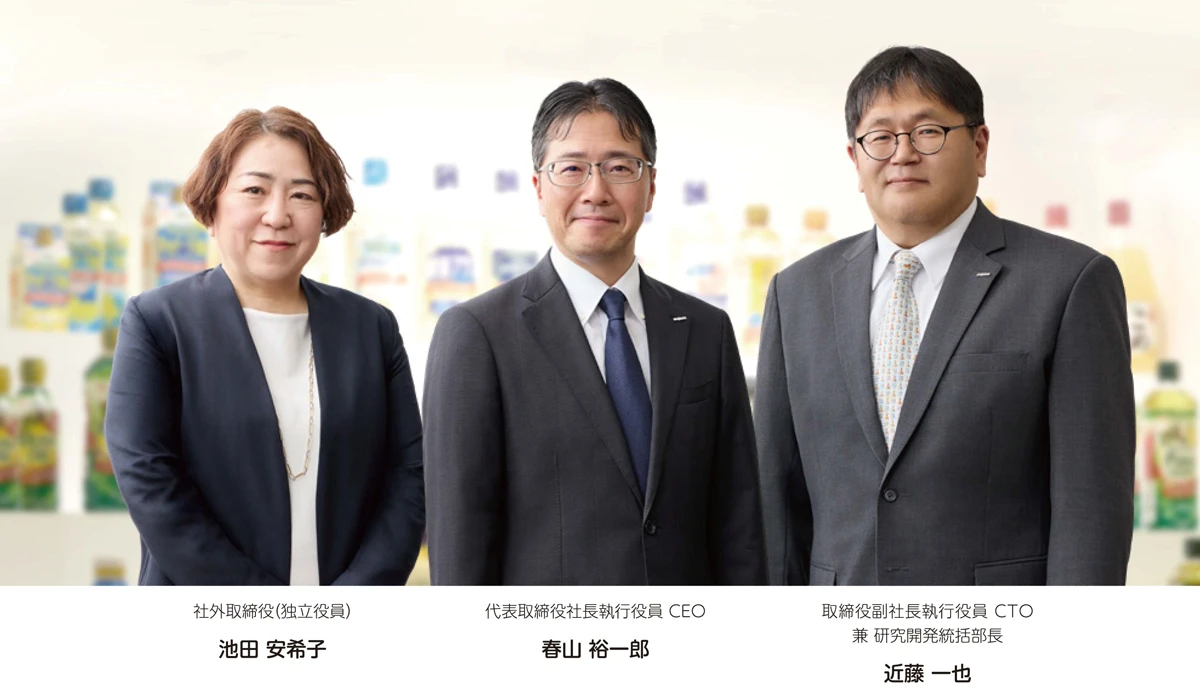
Members of our management team exchanged views based on their respective areas of responsibility and experience. The focus was on maximizing the value of human capital—an important management resource—and linking it to enhancing corporate value.
Basic Approach to Human Capital
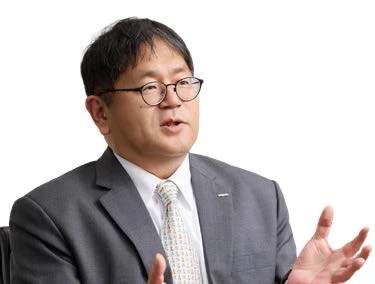
Human resources are the most important type of capital for achieving the targets of the Sixth Medium-Term Business Plan and realize medium- to long-term growth. Strengthening execution through human resource development toward our goals is indispensable, and I believe it is important to instill a shared understanding of our corporate philosophy system and management strategy.
I am acutely aware of the importance of people in realizing our vision of “Joy for Life—Bringing Joy to the Future by Food.” In 2024, we set our HR management direction as “human capital,” defined as maximizing each individual’s ability to create value, and established the Human Capital Policy. Over the past year, we have focused on fostering individuals who embody challenge and growth, and on preparing systems and workplace environments in which strong individuals can also thrive as teams.
The perspectives you both shared are extremely important for sustainable human capital management. I believe the most important thing is to formulate a human capital strategy that is linked to our management strategy and to execute it steadily.
In pursuing sustainable growth, we must adapt to medium- to long-term changes in the business environment. Especially in today’s so-called VUCA era, where external changes accelerate, we must respond quickly—sometimes even ahead of change—while also refining our core strength, “Oishisa Design (creating deliciousness).” By doing so, we will enhance our positioning and corporate value. I believe that the drivers of our vision will be enhancing the diversity and expertise of our human resources, and fostering an organizational culture that acts autonomously. As an executive, I will push forward human capital management to build the kind of people and organizational culture that embody our values: “Work together to achieve high targets and exceed expectations.”
Because initiatives on human capital are fundamental to enhancing corporate value, we set up the Human Capital Subcommittee under the Sustainability Committee, and have worked to create systems and environments where employees can grow more than ever, making them a driving force for growth. However, to formulate human capital strategies aligned with our management and business strategies and strengthen their effectiveness, we made the constructive decision to dissolve the subcommittee and, from April 2025, establish the Human Resources Committee.
Our highest priorities are developing people and fostering an autonomous organizational culture. We have many highly specialized personnel, and in addition to supporting them to further deepen their expertise, it is also essential to develop our middle management so they can lead transformation boldly, and to implement interdepartmental rotations that promote both challenge and growth. Alongside human resource development through rotation to broaden perspectives and skills, we are also working on cultivating the next generation of management talent.
From my experience managing major national-chain retailers and restaurant companies, I know first-hand the importance of people to a company. A business operates because its employees, each with different roles, give their best, and this enables initiatives for growth. That is why I believe it is vital to recognize each and every individual, and to provide skill development support, growth opportunities, and a comfortable workplace environment so they can realize their potential and thrive where they should be. That, in itself, is what DE&I initiatives are all about.
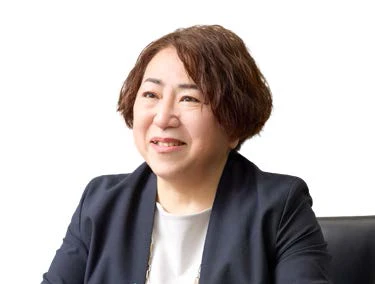
Our workforce is made up of people with diverse backgrounds and expertise. The key in DE&I initiatives is to create an environment that enables diverse talent to work together and thereby enhance corporate value. In such initiatives, we have also received support from our outside directors, who bring a wealth of experience. For example, Outside Director Ikeda has participated in our Cassiopeia Management School, launched in 2022 to develop female management candidates. By sharing her experiences and providing feedback on participants’ business project presentations, she has been a tremendous source of motivation and growth for them. She has also taken part in new initiatives to enhance the effectiveness of the Board of Directors. For instance, outside directors visited several of our domestic plants, and for the first time we held a Board meeting at a plant, in addition to holding a roundtable with female employees at production sites.
Yes, I have been actively participating in such initiatives, which has also deepened my own understanding of J-Oil Mills as an outside director. New executive members, including CEO Haruyama and CHRO Yamaguchi, are continuing to expand initiatives that involve directly visiting sites nationwide, not only to communicate management policy but also to engage in interactive exchanges of opinions. Sending the message that “we see you as individuals” and recognizing and respecting every single employee as a person is extremely important. I sincerely hope these activities will continue.
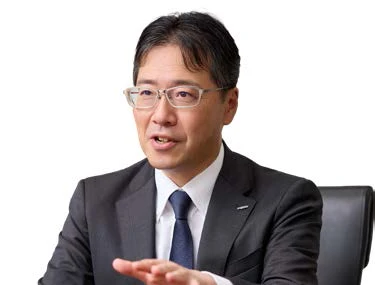
Successive presidents of our company have always placed importance on dialogue with employees, and I intend to carry on that tradition by actively engaging with them, sharing our values including our VMV (vision, mission, and values), and fostering unity. Meanwhile, at the Board of Directors, our discussions in recent years were inevitably centered on short-term business strategies for performance recovery amid severe business conditions such as surging raw material prices and yen depreciation. It was difficult to put “people” at the center of the agenda. Now that we have achieved a “revival” in FY2024, I would like to reestablish “people”—that is, human capital—as a key theme for J-Oil Mills, and as a director I intend to further enrich discussions on this subject.
Disclosure on human capital has been mandatory in securities reports since the fiscal year ended March 2023. This is a societal demand, and I understand it as proof that human capital is extremely important for companies. At our company as well, we want to discuss the subject thoroughly. However, what is truly important is initiatives aimed at enhancing corporate value; disclosure itself should not become the purpose. As the Board of Directors, we must take care to ensure that remains the focus.
Current Initiatives and Issues in Human Capital Management
As I mentioned earlier, our highest priority issues in 2025 are developing people and fostering an autonomous organizational culture. For human resource development, we need to clarify our specific development targets by creating a future human capital portfolio based on the business portfolio we should aim for over the medium to long term, and then identify the gaps with our current human capital portfolio. On that basis, we must effectively advance human resource development linked to our management strategy, including next-generation management talent, future young leaders, talent focused on specialized fields, people well-versed in dX, and talent who will pioneer new business domains. In particular, in this uncertain era often referred to as VUCA, it is essential not to rely solely on a linear extension of the past but to approach business with new ways of thinking and drive transformation. Developing leaders capable of doing this is an urgent task. Such talent will be the force that spurs transformation and fosters an autonomous organizational culture.
I believe corporate management consists of four elements: (1) vision, mission, and values (VMV): the management team, led by the CEO, repeatedly communicates our vision to employees to gain their empathy and unify the company; (2) management policy: formulating medium- to long-term policies and strategies; (3) business strategies and tactics: formulating and executing strategies and tactics for each business in line with management policy and strategy; and (4) management foundation: strengthening the corporate management foundation that makes all of this possible. My role as CEO is to promote and embed the VMW initiatives (1) and formulate the business strategy (2), while ownership of (3) business strategies and tactics and (4) management foundation lies with each responsible CxO. Promotion of the human capital strategy, one of the pillars of the management foundation, is being led by the CHRO.
I believe the Company’s measures on human capital are being advanced actively. Even when issues are identified, translating them into concrete actions and implementing them quickly is difficult. For example, it is important that employee satisfaction as measured by engagement surveys improves not temporarily, but continuously. The foundation for that is building a sound relationship of trust between the company and its employees. To gain empathy and understanding from employees and enhance their voluntary motivation to contribute, ensuring thorough understanding and penetration of the VMV is a major issue. At our company, CEO Haruyama has made it one of his management missions to “repeatedly communicate our vision to employees to gain their empathy and unify the Company ,” and this is also a theme being discussed at the Board of Directors. I therefore look forward to seeing results in this area.
As management, I am mindful of carefully and clearly explaining the VMV so that every employee can understand and empathize with it as a shared recognition. In addition, as part of this year’s policy, we are emphasizing the achievement and accumulation of positive change and small successes—so-called quick wins—in our communication with employees. Even small changes, if approached with a focus on positive movement, can give our employees a tangible sense of transformation and deepen their confidence. This, in turn, leads to the development of our people and the further cultivation of our organizational culture.
As mentioned earlier, beginning in July 2025 we have started visits by the management team to all business sites. We provide feedback on employees’ opinions and comments gathered during these dialogues and pursue proactive communication. As part of communication with employees, we also held, for the first time, a dialogue session with about 50 national executive committee members of the labor union, in addition to the regular settlement of accounts meetings conducted in the past. In this way, we shared the direction the company aims to pursue. As a companywide initiative, I want every employee, through dialogue, to internalize our value and raison d’être—“Work together to achieve high targets and exceed expectations ”—as the foundation of their own actions, toward realizing our envisioned future of “Joy for Life—Bringing Joy to the Future by Food.”
Future Initiatives
In today’s world, employees are able to maintain direct connections with society. Unlike before, engagement no longer naturally rises just through their connection to the company. Even as employees of our company, they are individuals within society. In this context, when I think about how to raise employee engagement, I believe it can only be done by aligning the company’s mission with each individual’s dreams. Specifically, it is important to communicate with each employee, to share our vision and management policies, and to reflect each individual’s aspirations in their development. We need to advance initiatives that respect each person. I want to support and have high expectations for the initiatives the management team is now undertaking.